What is the Best Automated Palletiser for Global Buyers?
In the rapidly evolving industrial landscape, selecting the right Automated Palletiser is crucial for global buyers. According to Mark Thompson, an expert in robotics and automation, "Innovation in Automated Palletisers can greatly enhance efficiency and reduce costs." This statement emphasizes the significance of choosing a solution that fits specific operational needs.
Automated Palletisers streamline logistics and improve workflow. They are essential in industries ranging from food and beverage to pharmaceuticals. However, not all solutions are created equal. Some systems may not integrate well with existing operations, leading to inefficiencies. This highlights the importance of thoughtful selection and research.
Understanding the features and capabilities of various Automated Palletisers is vital. Buyers should consider aspects like speed, load capacity, and ease of use. Each requirement can vary significantly among different sectors. A well-chosen system can transform operations, but it requires careful evaluation to avoid costly mistakes.
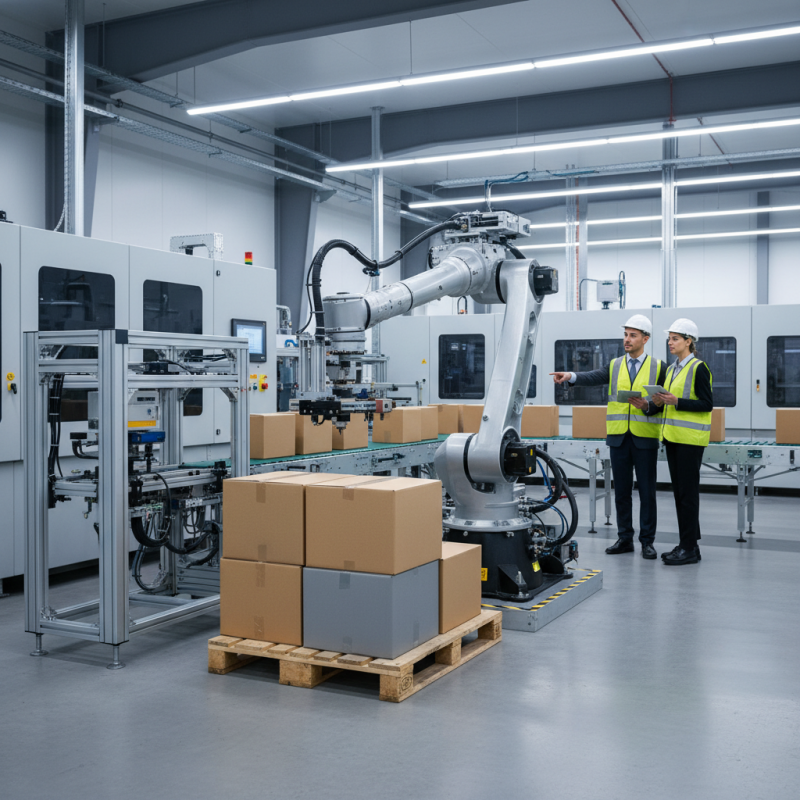
Understanding Automated Palletisers: A Comprehensive Overview
Automated palletisers play a crucial role in modern logistics. They increase efficiency by reducing the time required to stack products. In warehouses and factories, these machines enhance productivity significantly. Businesses are turning to automation to tackle growing demands and labor shortages. The choice of palletiser impacts the entire supply chain.
When selecting an automated palletiser, buyers should consider various factors. The size of the products, their weight, and the stacking pattern are all essential. Some systems adapt easily to different types and sizes of loads. However, not all machines can handle every situation. Flexibility and adaptability are key but can lead to challenges in implementation.
Investing in technology can avoid common pitfalls. Continuous change in packaging and product lines may create a gap between machine capability and operational needs. Regular maintenance is also necessary for optimal performance. Buyers must balance automation with human oversight, ensuring that machines complement workers effectively.
Key Features to Consider When Choosing an Automated Palletiser
Choosing the right automated palletiser involves understanding key features. First, consider the type of products you handle. Different palletisers are designed for various sizes and weights. For instance, a unit that works well with lighter boxes may not handle heavier loads effectively. A comprehensive analysis of your product dimensions is crucial.
Another significant aspect is the speed of the operation. Automated palletisers vary in their throughput capabilities. High-speed solutions might seem ideal, but they can lead to product damage if not monitored closely. It's important to balance efficiency with the integrity of the goods. Assessing the potential trade-offs here can guide your decision-making process.
Additionally, flexibility is essential. Some palletisers allow adjustments for different product configurations. This feature can save time and costs in the long run. However, flexibility can sometimes lead to complexity. Make sure your team is trained adequately to manage these adjustments. This training can prevent operational hiccups and boost overall productivity.
Market Trends: Growth and Demand for Automated Palletisers in 2023
In 2023, the market for automated palletisers is experiencing significant growth. Industries are increasingly seeking efficient solutions. Companies are looking to improve their productivity while reducing labor costs. Automated palletising systems play a crucial role in achieving these goals.
Demand for these systems is driven by several trends. First, there is a rise in e-commerce. This fuels the need for faster and more reliable packaging and distribution. Additionally, businesses are becoming more aware of the importance of automation in production lines. They aim to minimize human error but often face challenges in integrating new technologies.
Adopting automated palletisers is not without its hurdles. Many organizations struggle with the initial setup costs and the steep learning curve. Some companies find it difficult to adapt their existing processes. Additionally, ensuring compatibility with various product types can be challenging. These factors often lead to delays in implementation, requiring a reevaluation of strategies. Despite these obstacles, the overall outlook for automated palletisers remains optimistic as companies strive for greater efficiency.
Comparative Analysis of Leading Automated Palletiser Brands
The landscape of automated palletisers is dynamic, with various brands vying for dominance. A recent industry report by a leading logistics consultancy indicates a growth rate of 12% in automated palletiser adoption over the next five years. This shift reflects the growing need for efficiency and precision in warehousing operations. Despite this growth, selecting the right palletiser can be daunting, as buyer requirements vary widely.
Machine configurations are critical for performance. Some models offer flexible configurations that adapt to different product types. Additionally, speed and payload capacity are essential factors. According to industry data, the average throughput of top brands ranges from 1,200 to 2,500 units per hour. However, the complexity of integration into existing systems can undermine these capabilities. Many buyers report challenges in aligning new technologies with legacy systems, which can create bottlenecks.
Moreover, the discussion of automation often omits the human element. Employees may feel threatened by robotic automation, leading to a resistance to change. A survey found that 65% of workers believed automation could compromise job security. This highlights the need for a balanced approach. While technology boosts productivity, it's crucial to foster an inclusive environment where human contributions are valued alongside automated processes. Thus, selecting an automated palletiser is not purely a technological decision; it requires thoughtful consideration of both operational efficiency and employee engagement.
Cost-Benefit Analysis: ROI on Automated Palletising Solutions
Automated palletising solutions are gaining traction among global buyers. They promise efficiency and a strong return on investment (ROI). Calculating the true ROI requires a detailed cost-benefit analysis. Many factors come into play, including productivity gains and labor cost reductions.
Investing in automation can streamline operations. However, initial costs can be high. It's essential to weigh the long-term benefits against these upfront expenses. A well-implemented system might lead to greater efficiency and reduced waste. Look for technologies that can adapt over time, as the production environment often changes.
**Tips:** Consider what specific needs your operation has. Evaluate how automation can integrate with existing processes. Investing time in research can prevent costly mistakes later on. Don’t rush the decision; reflect on both immediate costs and future savings. It may be helpful to consult with industry experts for tailored advice.
Cost-Benefit Analysis of Automated Palletising Solutions
This chart illustrates the projected ROI (Return on Investment) for various automated palletising solutions based on initial investment costs and estimated annual savings from increased efficiency and reduced labor costs.