In today’s competitive business landscape, the choice of turnkey automation systems can significantly impact efficiency. A recent report revealed that businesses adopting automation see a productivity increase of up to 30%. These systems offer a streamlined solution for various operational needs. However, choosing the right one is not straightforward.
Understanding specific business requirements is crucial. Every organization has unique processes and goals. Not all turnkey automation systems can fit every business model seamlessly. Some may not address specific needs effectively. For instance, a system designed for manufacturing might fall short in a service-oriented company.
Moreover, it’s essential to consider cost and scalability. Industry data suggests that small and medium enterprises should focus on systems that can grow with them. This adaptability can prevent future disruptions. Yet, many companies find themselves locked into rigid systems that don't evolve. Thus, careful evaluation is necessary before making a decision.

Turnkey automation systems offer a complete package for businesses seeking efficiency. They simplify processes, providing ready-to-use solutions. This can save time and reduce the resources needed for implementation. Many companies see immediate improvements in productivity. Systems are designed to be user-friendly, requiring minimal training. This ease of use is a significant advantage for any organization.
There are various benefits to consider. These systems often lead to cost savings. By automating tasks, companies can allocate staff to more strategic roles. However, it's crucial to assess the specific needs of your business. Not all systems fit every industry perfectly. Reflection on your unique workflows is essential before making a decision. A mismatch can lead to operational issues or wasted investments.
Ultimately, understanding your needs before choosing a turnkey solution will guide you to the best fit. A successful implementation can enhance efficiency dramatically. Yet, an ill-suited choice can create more problems than it solves. Prioritize understanding both your goals and the capabilities of the system. This careful consideration will help steer your business toward sustainable automation success.
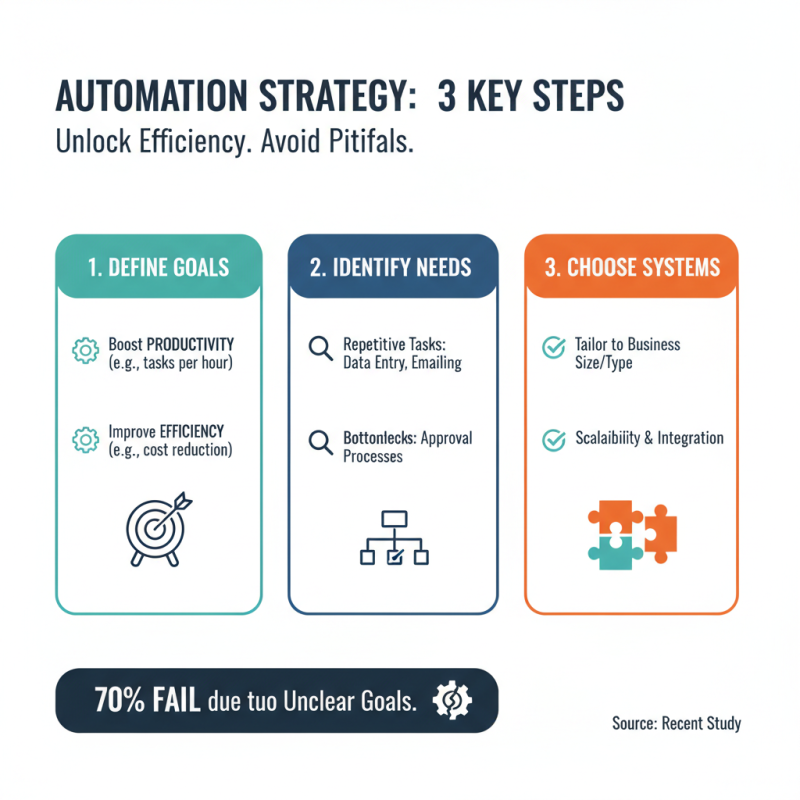
Identifying your business needs for automation solutions is crucial. Automation can boost productivity and efficiency. However, not all systems fit every business. A recent study found that 70% of businesses fail to implement automation effectively due to unclear goals.
Understanding your workflows is essential. Map out repetitive tasks that consume time. Are these tasks draining your resources? Consider areas with the most significant impact. For instance, if manual data entry takes hours weekly, automating this can save valuable time. Research indicates that businesses can increase operational efficiency by up to 30% through targeted automation.
Moreover, consider scalability. Your chosen system should grow with your business. Automation is not just a one-time fix; it's a long-term investment. Regular analysis of your operations is vital. Are the solutions you chose still effective? The industry suggests reevaluating your automation strategy every two years. This helps to ensure alignment with your evolving needs and technological advances.
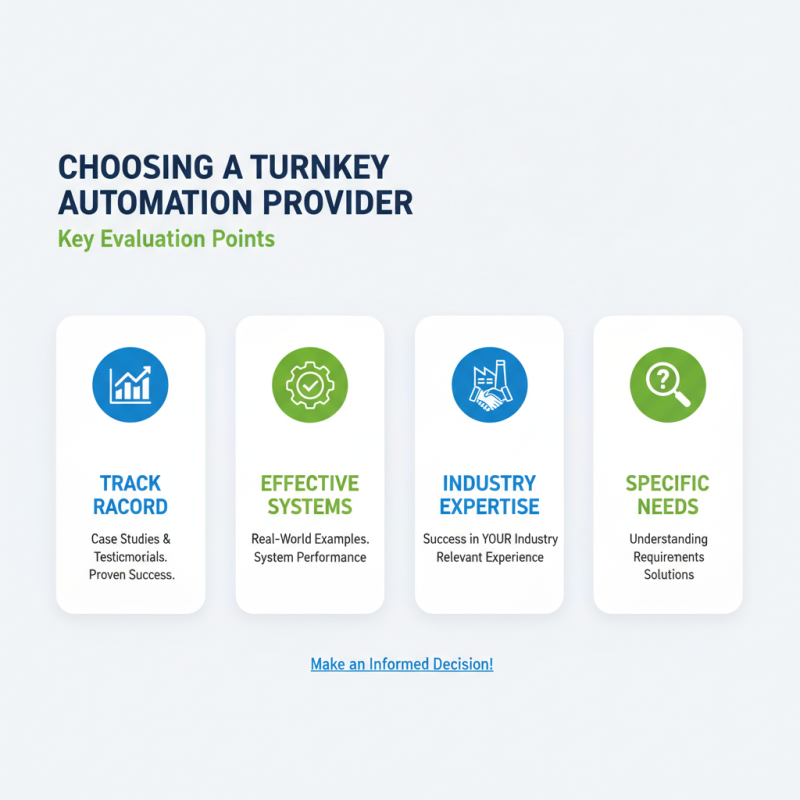
When evaluating different turnkey automation providers, it’s crucial to consider their track record. Look at case studies and testimonials. Real-world examples can reveal how effective their systems are. You want a provider with proven success in your industry. Make sure they understand your specific needs.
Another important factor is customization. Some providers offer rigid solutions that may not fit your operations perfectly. Ask about flexibility in their systems. Can they adapt to your workflow? Providers should be open to feedback. If they are not, it may lead to challenges down the road.
Cost is always a consideration. While affordable options exist, the cheapest isn’t always the best. A low price can mean sacrificing quality. Evaluate what is included in the package. Are there hidden fees? Seek clarity on ongoing support and maintenance costs. Understanding these aspects will help you make a more informed decision.
When investing in turnkey automation systems, understanding costs and potential ROI is vital. A recent study by the Association for Advancing Automation indicates that businesses can expect a 20-30% reduction in operational costs after implementing such systems. This reduction stems from increased efficiency and decreased manual errors.
However, not all systems deliver the same results. Costs can vary significantly, depending on features and integration levels. A 2022 report revealed that average initial investments can range from $50,000 to over $250,000. Companies must carefully evaluate the long-term benefits against these upfront costs. Setting clear benchmarks for efficiency gains is essential to compare potential returns accurately.
While the allure of automation is strong, organizations must remain vigilant. ROI isn't guaranteed; some businesses report less than 10% increase in productivity. Select systems that align well with your specific processes. An ill-fitting solution can lead to disappointment. Focus on continuous evaluation and be prepared to adjust strategies as needed.
| System Type | Initial Cost ($) | Annual Maintenance Cost ($) | Estimated Annual Savings ($) | ROI (%) |
|---|---|---|---|---|
| Manufacturing Automation | 50,000 | 5,000 | 25,000 | 40% |
| Retail Automation | 30,000 | 3,000 | 15,000 | 50% |
| Logistics Automation | 75,000 | 6,000 | 35,000 | 38% |
| Office Process Automation | 20,000 | 2,000 | 10,000 | 40% |
| Customer Service Automation | 15,000 | 1,500 | 8,000 | 52% |
When selecting a turnkey automation system, scalability is crucial. A 2022 report by McKinsey indicated that 75% of companies experienced rapid growth when using scalable automation solutions. These systems can adjust to your business needs, allowing for flexibility as you expand. Companies must prioritize tools that integrate seamlessly with existing processes. This integration can minimize disruptions and improve overall efficiency.
Support is another vital factor in making your choice. A survey from Deloitte revealed that 60% of businesses faced challenges due to inadequate support after implementation. Seeking providers with robust post-deployment assistance is essential. They should offer training, troubleshooting, and regular updates. Businesses must be prepared to invest time and resources into this support. Failure to do so can lead to frustrations and decreased productivity.
Finding the right balance between scalability and support isn’t straightforward. Many firms overlook essential features while rushing to implement automation. This often leads to systems that don’t align with operational goals. A thoughtful approach is necessary to avoid pitfalls and achieve long-term success.