
An Assembly Line Trolley may look like a simple cart, but the wrong choice can slow a shift. A narrow aisle, uneven floor joint, or poorly placed handle can turn routine movement into daily friction. Choosing well starts with the work, not the product photo. What must the trolley carry, how often will it move, and where will it travel?
This guide explains how to match trolley design to real production needs. It covers load capacity, shelf spacing, frame materials, wheel type, braking, and handle height. Measure the actual parts and containers; a box that overhangs a shelf can become awkward to steer. Check aisle widths and turning points, too. A trolley that fits beside a workstation may still struggle at a tight corner.
Small details matter. A quiet wheel can help in a busy area, while a brake can keep the trolley steady during loading. Operators should be able to reach items without repeated bending or stretching. Still, specifications do not tell the whole story. A listed capacity cannot reveal whether a loaded trolley feels balanced on your floor. A short trial with representative loads can expose issues that a catalogue misses. It takes time. And sometimes, the first choice needs revisiting.
The right Assembly Line Trolley supports a smoother flow of materials without adding needless handling. By comparing practical requirements, maintenance needs, and operator feedback, you can make a more informed selection—and know what to check before committing.
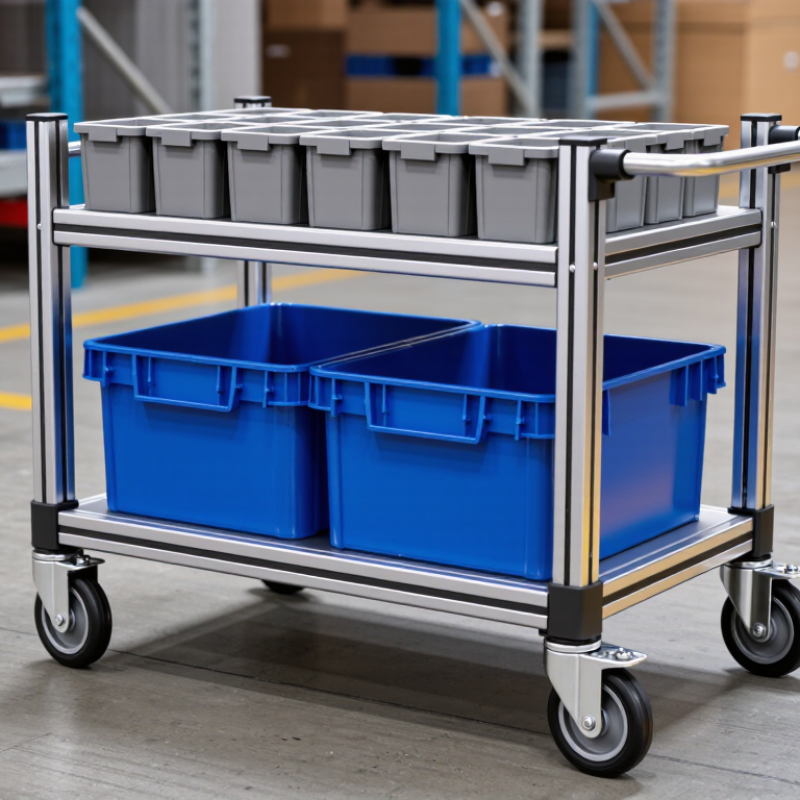
Start by naming the trolley’s exact job. Will it deliver components to one workstation, move tools between cells, or carry partly assembled products? Each role creates different demands. A trolley feeding a fixed station may need smooth, repeatable movement and easy access to bins. One serving several work areas may need clear labels and flexible storage.
Estimate the real workload, not just the average load. Record the heaviest expected load, how often the trolley moves, and the distance it travels per shift. Include unevenly distributed parts, such as a heavy motor placed on one side. That matters. Check the rated capacity, shelf strength, wheel type, and braking needs against these conditions. A trolley that feels stable when empty may handle poorly when fully loaded or pushed over floor joints.
Observe the route during normal production, including tight turns and busy handoff points. Measure doorways and aisle clearance before choosing the trolley’s width. Consider handle height and whether workers can reach parts without twisting or bending repeatedly. Still, workload estimates are easy to underestimate. Peak demand, not a quiet hour, should guide the assessment. If the task changes between shifts, note those differences and reassess the layout before ordering.
Choosing the right assembly line trolley starts with the real load, not the advertised maximum. Add the heaviest typical batch, containers, tools, and any fixtures. Then check how the weight sits on the platform. An off-center load can make turning awkward, even when the trolley remains within its rated capacity. Leave practical room for uneven loading and repeated trips. Do not guess. A short floor test with a representative load can reveal snagging wheels or poor visibility.
Dimensions matter just as much. Measure aisle width, workstation openings, turning space, and the height of shelves or machine interfaces. Include handles and protruding parts in the trolley’s footprint. The U.S. Bureau of Labor Statistics reported 2.6 million nonfatal workplace injuries and illnesses in private industry in 2023. Liberty Mutual’s 2024 Workplace Safety Index estimated $12.8 billion in annual direct costs for overexertion involving outside sources, based on injury data. These figures do not prove a trolley will prevent injuries, but they support careful handling design. Check storage needs, too: where will the trolley park, and can it hold empty bins without blocking access? A tidy drawing can still miss a real bottleneck. Test the route during a busy shift, then revise the specification if needed.
Compare representative trolley profiles to match carrying capacity with available floor space and shelf requirements.
These are illustrative planning examples, not universal product specifications. Check the rated capacity and dimensions for the specific trolley, and allow for the combined weight of parts, containers, and fixtures.
A trolley’s frame material should match the air, floor, cleaning routine, and load—not just its purchase price. In dry indoor areas, coated steel can offer useful strength at a reasonable cost. For damp or washdown zones, stainless steel may resist corrosion better, but cleaning chemicals still matter. Check their compatibility with the exact alloy. The 2013 NACE IMPACT study estimated corrosion costs at US$2.5 trillion worldwide, about 3.4% of global GDP. That figure covers many industries, not trolleys alone, but it shows why moisture and chemical exposure deserve attention.
Weight matters too. Aluminum can make a trolley easier to maneuver, though thin sections may dent under concentrated loads. Polymer components can reduce noise and resist some corrosive environments, but heat, impact, and chemical exposure may limit their service life. Match the casters to the floor as well: hard wheels can mark soft flooring, while soft wheels may wear faster on rough concrete. World Steel Association materials note that steel is recyclable, but recyclability does not make it the right choice for every operating environment. A useful specification records maximum load, temperature, spills, wash methods, and floor type. One detail is easy to miss: a frame may survive the environment while its fasteners or wheels fail first. Recheck those choices after a trial run.
| Material | Best-Fit Operating Environment | Key Advantages | Important Considerations | Common Trolley Applications |
|---|---|---|---|---|
| Powder-coated carbon steel | Dry indoor production areas with limited exposure to corrosive chemicals or washdowns. | Strong and widely available; coating provides a protective finish and can be color-coded. | Scratches or damaged coating can expose the steel to corrosion. Inspect high-wear edges and joints. | General-purpose parts carts, tool trolleys, and work-in-process transport. |
| Stainless steel 304 | Clean production spaces and areas requiring frequent cleaning with mild detergents. | Good general corrosion resistance, durable construction, and a smooth, easy-to-clean surface. | May be unsuitable for prolonged exposure to high chloride levels or aggressive chemicals; verify cleaning-agent compatibility. | Clean assembly areas, food-related production support, and regularly cleaned workstations. |
| Stainless steel 316 | Wet or corrosive environments where exposure to salts or chlorides is a concern. | Molybdenum-bearing grade with better resistance to chloride-related corrosion than 304 in many applications. | Typically costs more than 304; suitability still depends on chemical concentration, temperature, and exposure time. | Washdown support, coastal facilities, and process areas with chloride exposure. |
| Aluminum | Applications where low trolley weight and easy manual handling are priorities. | Lightweight and naturally protected by a surface oxide layer; easy to move when designed appropriately. | Strength and impact resistance depend on alloy and design; check load capacity and avoid incompatible chemical exposure. | Light-duty kitting carts and frequently repositioned assembly trolleys. |
| High-density polyethylene (HDPE) | Areas where moisture, many common chemicals, or non-marking contact surfaces matter. | Resistant to moisture and many chemicals; does not rust and can help protect handled parts from scratches. | Load capacity, stiffness, and temperature limits vary by product and design; confirm suitability for the operating conditions. | Shelf liners, bins, and contact surfaces on carts used for delicate or wet-process components. |
| Material combination | Mixed environments where the frame, shelves, and contact surfaces face different demands. | Allows a strong frame to be paired with corrosion-resistant or part-protective surfaces where needed. | Check joints, fasteners, and interfaces for corrosion, wear, and cleaning access; dissimilar metals can require suitable isolation. | Steel-frame carts with stainless shelves or polymer liners for targeted protection. |
Selection tip: Match the material to the actual cleaning chemicals, moisture, temperature, impact risk, and required load capacity. Confirm specifications with the material and trolley suppliers before use.
Choose an assembly line trolley by testing it on the actual route, not just a showroom floor. It should roll smoothly over floor joints and turn easily in tight aisles. Check wheel size, swivel action, brakes, and handle height with a typical load. A trolley that drifts when parked or catches on a threshold can create problems during a busy shift. Small details matter.
Ergonomics deserves equal attention. The U.S. Bureau of Labor Statistics recorded 2.6 million nonfatal workplace injury and illness cases in private industry in 2023. That figure is not trolley-specific, but it shows why routine material handling merits care.
Liberty Mutual’s 2022 Workplace Safety Index estimated that overexertion involving outside sources cost employers $12.8 billion in direct costs.
Look for a handle that lets operators push without bending or reaching, and a deck that keeps frequently used parts within easy reach. Guardrails and stable shelves help prevent items from sliding during turns. A checklist can still miss an awkward corner at shift change, so have operators test the trolley with real parts and report what feels difficult.
Check Line Compatibility, Maintenance, and Total Cost
A trolley that looks sturdy in a catalog can still fail on a tight aisle. Measure aisle width, turning points, workstation height, and the distance between replenishment stops. Check whether its shelf spacing fits actual bins, and whether its handles or tow points match the line’s movement method. Fit matters. A short floor trial with a loaded trolley often reveals awkward corners that a drawing misses.
Maintenance affects the real cost. Inspect caster material, wheel diameter, bearings, brakes, and load rating; small wheels can struggle with floor joints and debris. Set a simple inspection schedule and record wheel replacements, repairs, and time out of service. The U.S. Bureau of Labor Statistics reported 2.4 injury and illness cases per 100 full-time workers in private industry in 2023. This broad figure is not trolley-specific, but it reinforces the value of reviewing handling risks and pushing effort with operators.
Compare purchase price with customization, spare parts, cleaning time, floor wear, and replacement frequency. Count the downtime. A low-cost model may need frequent caster changes, while an oversized trolley can waste space and slow replenishment. Track these costs over the expected service life, then compare suppliers using the same assumptions. A small pilot helps, though it may not capture every seasonal load or shift pattern. Recheck the choice after operators have used it for several weeks.
