How to Find the Best Robotics Jobs Today?
In today's rapidly evolving market, robotics jobs are in high demand. These roles span various sectors, including manufacturing, healthcare, and research. Robotics professionals are shaping the future. However, finding the right position can be a challenge.
Identifying suitable robotics jobs requires a strategic approach. Many applicants focus solely on technical skills, but soft skills also play a crucial role. Communication, teamwork, and problem-solving are vital in this field. Potential employers seek candidates who can adapt and innovate. Ignoring this might hinder job prospects.
Networking is essential in this industry. Connecting with professionals through events and online platforms can provide valuable insights. Don’t underestimate the power of personal connections. Finding the best robotics jobs often involves effort and resilience. Job seekers should remain open to learning from interviews, even if they don’t succeed. Each experience offers an opportunity for growth and improvement.

Understanding the Current Landscape of Robotics Job Market Trends
The robotics job market is evolving rapidly. Companies across sectors seek skilled professionals. Fields like healthcare, manufacturing, and automation lead this demand. Professionals need to adapt to changing technologies.
Understanding current trends is vital. Employers look for candidates with strong technical skills. Familiarity with AI, machine learning, and robotics programming is crucial. Graduates should also develop soft skills. Communication and teamwork are essential in robotics teams.
Tips: Build a solid portfolio. Showcase your projects, and make them visible. Networking is key; attend industry events and online forums. Stay updated with the latest research and innovations. Consider mentorship opportunities to improve your skills. Reflect on your journey; it can help identify areas needing growth.
How to Find the Best Robotics Jobs Today? - Understanding the Current Landscape of Robotics Job Market Trends
| Job Title |
Average Salary ($) |
Required Experience (Years) |
Skills Required |
Job Growth Rate (%) |
| Robotics Engineer |
85,000 |
3-5 |
C/C++, MATLAB, CAD Software |
9 |
| Automation Engineer |
80,000 |
4-6 |
PLC Programming, Robotics, Troubleshooting |
7 |
| Machine Learning Engineer |
110,000 |
3-5 |
Python, TensorFlow, Data Analysis |
11 |
| Robotics Technician |
60,000 |
1-3 |
Electronics, Robotics, Problem Solving |
5 |
| Robotics Research Scientist |
95,000 |
5-7 |
Robotics Control, Simulation, Research Methodology |
10 |
Identifying Key Skills Required for Today’s Robotics Positions
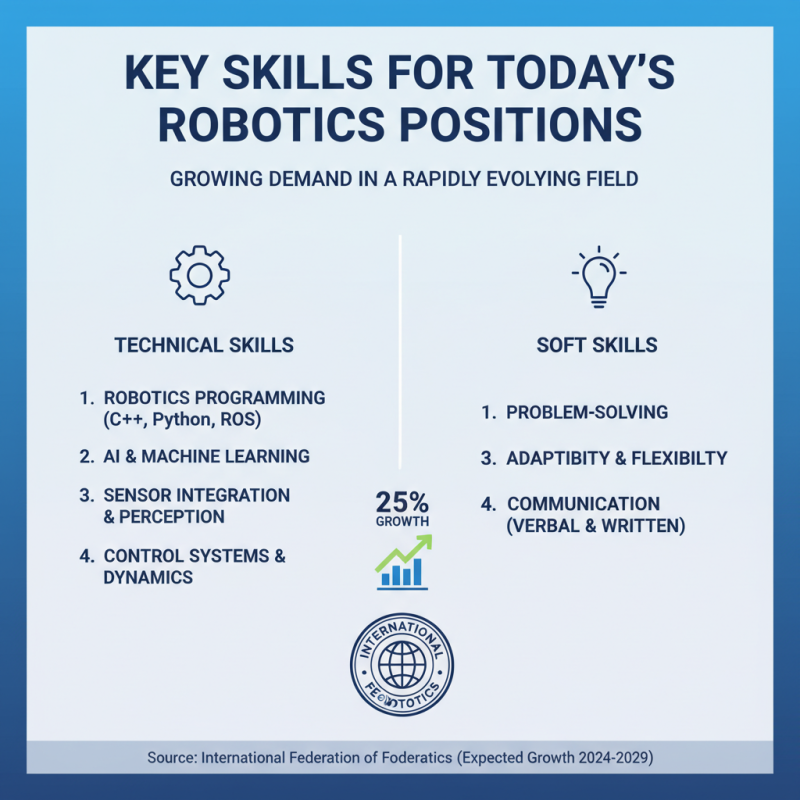
In today’s rapidly evolving robotics field, specific skills are increasingly critical for job seekers. According to the International Federation of Robotics, the demand for skilled professionals is expected to grow by 25% over the next five years. This surge highlights the importance of a solid foundation in both technical and soft skills.
Proficiency in programming languages, such as Python, C++, and ROS, is essential. A study by the Robotics Industries Association found that over 80% of employers prioritize candidates with strong coding abilities. Additionally, understanding machine learning and artificial intelligence enhances a candidate’s marketability. Communication skills are equally vital. Collaboration within multidisciplinary teams is common, and the ability to convey complex ideas is a must.
However, there are gaps that many aspiring robotics professionals overlook. Soft skills often get less attention than technical prowess. Yet, an imbalance may lead to difficulty in team settings. The focus should not only be on coding but also on fostering interpersonal relationships. As the robotics landscape continues to shift, those who adapt and develop a well-rounded skill set will better position themselves for success.
Exploring Top Industries Hiring Robotics Professionals in 2023
Robotics is increasingly relevant today, particularly in sectors like manufacturing, healthcare, and logistics. In manufacturing, robotic automation has transformed production lines. Companies seek engineers who can design and maintain these sophisticated systems. The focus is often on efficiency and precision, yet mistakes can happen. A miscalibrated robot can lead to delays.
Healthcare is another booming area for robotics professionals. Surgical robots assist in procedures, enhancing precision and reducing recovery time. However, integrating these technologies can be challenging. Training medical staff is crucial but often overlooked. Patients may hesitate to embrace robotic assistance. Addressing these concerns requires a balance of technology and human touch.
Logistics and supply chain management heavily rely on robotics. Automated warehouses utilize robots for inventory management. This sector demands software engineers to create algorithms that optimize these systems. Yet, inefficiencies still surface. Human oversight remains essential to correct errors in real time. As industries evolve, the demand for skilled robotics professionals continues to grow, reflecting a broader trend toward automation.
Top Industries Hiring Robotics Professionals in 2023
Utilizing Job Platforms and Networks for Robotics Job Opportunities
Finding the best robotics jobs today requires a strategic approach. Job platforms and professional networks serve as essential tools in this search. Research from the International Federation of Robotics shows a growing demand for robotics professionals, with forecasts estimating a 10% increase in job opportunities annually. This trend emphasizes the importance of utilizing various job platforms effectively.
Networking can unlock hidden opportunities. Engaging with industry groups on platforms like LinkedIn can help in making valuable connections. According to a report by the World Economic Forum, 85 million new jobs will emerge in technology fields, including robotics, by 2025. Active participation in discussions can lead to job referrals and collaborations, critical for career advancement in this competitive landscape.
Candidates should also consider the potential gaps in their qualifications. A survey by the Robotics Industries Association highlighted that 40% of employers struggle to find talent with the right skills. Continuous learning through online courses and certifications is vital. It can bridge these gaps and increase employability. Focusing on specific skill sets relevant to current job openings can enhance prospects significantly.
Evaluating Salary Expectations and Growth Potential in Robotics Careers
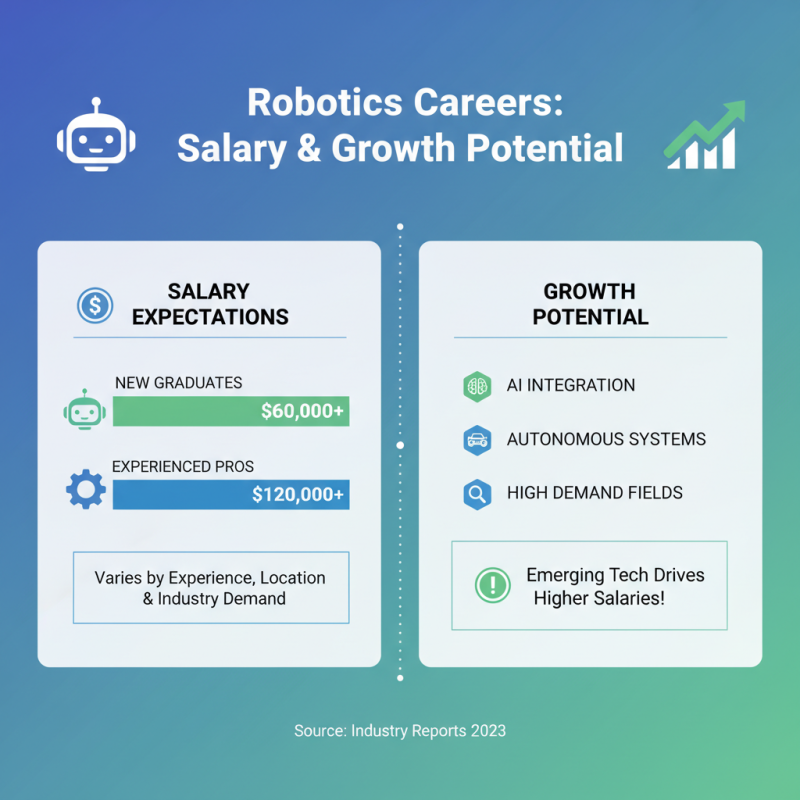
When exploring robotics careers, salary expectations and growth potential are key factors. The average salary for robotics engineers can range significantly, depending on experience and location. New graduates may start at around $60,000, while seasoned professionals can earn over $120,000. Factors like job demand in specific industries also affect these figures. Emerging fields, such as AI integration and autonomous systems, are driving high salaries.
Growth potential is equally promising. The robotics sector is expanding in manufacturing, healthcare, and logistics. Companies are investing heavily in automation. However, this rapid growth can lead to inconsistencies. Career advancement may vary greatly between companies. Some firms offer robust training programs, while others may lack resources for employee development.
It's crucial to stay updated on industry trends. Networking and continued education can enhance skills. This proactive approach fosters adaptability in a changing landscape. Resilience is needed as roles evolve with technology. The ongoing shift may create opportunities, but challenges will arise too. Balancing aspirations with realistic expectations will guide career decisions in robotics.