What Are the Top Robotic Solutions for Global Buyers?

Robotics now supports work across warehouses, factories, hospitals, farms, and customer-facing spaces. For global buyers, choosing a system is rarely just a matter of speed or novelty. A mobile robot moving cartons through narrow aisles has different needs from a robotic arm placing parts beside workers. The right choice depends on the task, operating environment, staff skills, and available technical support. Fit matters.

This guide introduces leading categories of robotic solutions, including industrial arms, collaborative robots, autonomous mobile robots, and service systems. It considers practical details buyers can verify: payload, reach, navigation accuracy, safety features, software compatibility, and expected maintenance. A demonstration should reflect real working conditions, such as uneven floors, changing light, or frequent product swaps—not only a clean showroom floor.

Global purchasing adds further questions. Buyers should check installation plans, spare-parts access, training, warranty terms, and local safety requirements before committing. A low purchase price may hide costs for integration or downtime. Even good data can mislead when it comes from a different site or workload. No system is perfect. The comparisons ahead aim to help readers ask sharper questions, assess supplier claims, and match automation to measurable business needs. Decisions still require site-specific testing and review by qualified teams.
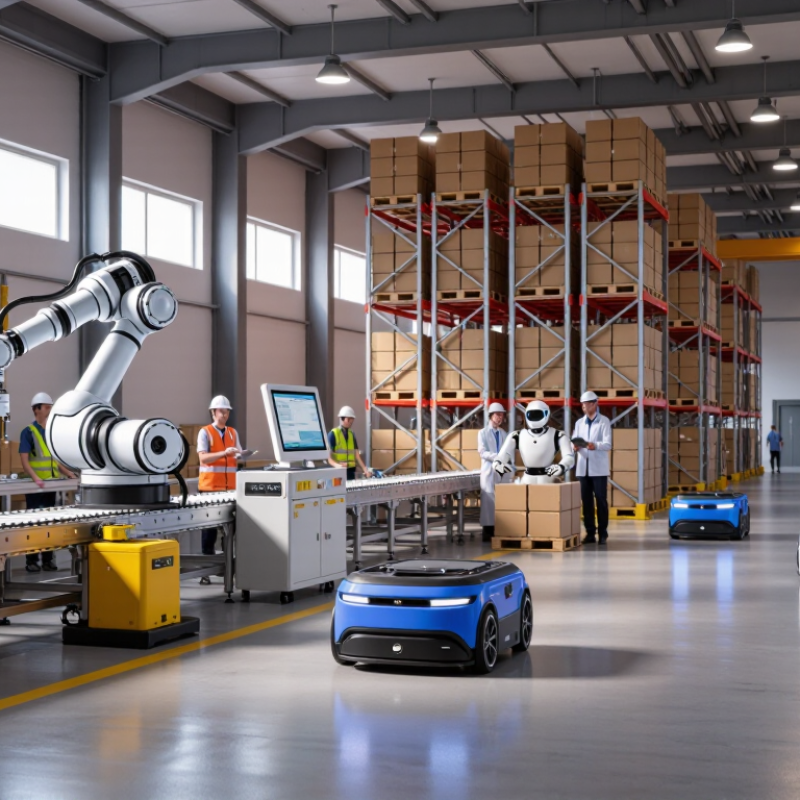
What Are the Top Robotic Solutions for Global Buyers?

Core Components and Operating Principles of Robotic Systems

A robotic system is more than an arm. Its structure usually includes a frame, joints, motors, a controller, sensors, and an end effector. The frame carries loads; actuators move each joint. A gripper, suction cup, or tool performs the task. Small differences in payload or reach can change which configuration works.

The controller coordinates motion using programmed instructions and sensor feedback. Encoders report joint positions, while cameras or force sensors help detect objects and contact. The system compares expected movement with measured results, then adjusts commands. This feedback loop supports repeatable work. It is not magic. Poor calibration can still produce errors.

In practice, teams test a robot with the actual workpiece, lighting, and workspace. A shiny metal part may confuse a camera; a flexible cable can snag near a moving joint. Safety scanners and emergency stops help manage risk, but they do not replace thoughtful layout or operator training. The diagram looks tidy. The factory rarely does. Integration often takes longer than expected, and that deserves more attention than a glossy specification sheet.

Major Types of Robotic Solutions for Global Buyers

Robotic solutions cover several distinct jobs, and global buyers should compare them by task rather than by appearance. Industrial robot arms handle repeatable welding, palletizing, and machine tending. They suit fixed work cells where reach, payload, and cycle time are known. Collaborative robots can share space with workers on lighter tasks, such as fastening small parts or loading trays. Fit matters more than speed alone.

Autonomous mobile robots move bins between storage and production areas. Some follow mapped routes, while others adjust to changing obstacles. Vision systems inspect labels, surface defects, or component placement; their reliability depends on lighting and camera setup. Picking robots combine cameras and grippers to sort varied items, but irregular packaging can still cause missed picks. Not plug and play.

Buyers should also assess installation, operator training, spare parts, and local technical support. A robot that performs well in a demonstration may struggle with dusty floors, uneven loads, or frequent product changes. Request trials using real materials and measure downtime as well as output. Compare the full workflow, including safety barriers, software connections, and maintenance access. The less obvious question is whether the process should be automated at all; a poorly organized work area can make even capable equipment frustrating to use.

Industries and Tasks Served by Different Robot Categories

Industrial buyers should match robot categories to the task, material, and work environment.

Articulated arms handle welding, machine tending, and palletizing, where reach and payload matter. In an automotive cell, for example, an arm may move a heavy part between a fixture and a conveyor.

SCARA robots suit fast, repeatable pick-and-place work, such as placing small components on an electronics line.

Delta robots can sort lightweight items above food or consumer-goods packaging belts. Small details matter.

Mobile robots move bins and supplies through warehouses, factories, and some healthcare facilities. Their usefulness depends on clear routes, safe pedestrian sharing, and reliable connections to doors or lifts.

Collaborative robots can assist with assembly, screwdriving, and inspection near workers, but “collaborative” does not mean risk-free; each task needs a proper safety assessment.

A robot that performs well in a demonstration may struggle with variable part positions or frequent product changes. That gap deserves attention.

Tips: Ask suppliers for cycle-time data using your actual parts, not just sample specifications. Check changeover time, maintenance access, and operator training needs. Watch the handoff between the robot and surrounding equipment. A cell can look efficient on paper yet still frustrate operators. Planning is rarely perfect, so leave room to adjust fixtures and workflows after installation.

Key Factors for Comparing Robotic Solutions Across Markets

Compare robotic solutions by matching them to a clearly defined task, not by headline speed alone. Record payload, reach, cycle time, and placement accuracy under the same test conditions. A palletizing system handling mixed carton sizes faces different demands from a robot moving small parts on a fixed line. Small details matter. Note how often products change, and whether workers need quick access to the work area.

Market conditions can change a solution’s performance. Check operating temperature, dust exposure, available floor space, and power requirements at the actual site. A compact cell may suit a crowded facility, while a larger work envelope may reduce repositioning on a broad production line. Local maintenance support also matters. Ask how quickly technicians can respond and whether common replacement parts are stocked nearby. Availability matters.

Compare integration needs alongside the robot itself. Confirm compatibility with existing conveyors, sensors, control systems, and data practices before estimating installation time. Safety measures should fit the task and the people working nearby; have qualified specialists review the proposed setup. Training deserves attention too. A system that operators find difficult to adjust may lose productive hours despite strong specifications. Compare total costs over the expected service period, including installation, upkeep, training, and downtime. A short pilot using real materials can reveal problems that a proposal misses. I would still treat pilot results cautiously: one shift rarely captures every change in workload or staffing.

What Are the Top Robotic Solutions for Global Buyers?

A market-maturity indicator for comparing automation environments across countries.

Industrial robot density is the number of operational industrial robots per 10,000 manufacturing employees. Higher density can indicate greater market experience with automation, but buyers should also assess application fit, integration capability, safety requirements, service access, and total cost of ownership. Source: International Federation of Robotics, World Robotics 2024.

Deployment, Integration, and Ongoing Support Considerations

For global buyers, a robot’s quoted speed matters less than its fit with the entire workcell. Map the task, materials, cycle time, and safety zones before comparing proposals. IFR’s World Robotics 2024 reports 4.28 million industrial robots were operating worldwide in 2023, up 10% year over year. That installed base makes integration discipline a practical buying concern. Ask how the system will connect with existing controllers, sensors, software, and production data. Test a real workpiece, not only a polished demonstration.

Deployment plans should name an accountable integrator, site requirements, acceptance criteria, and downtime windows. Check floor space, power, network coverage, and access for maintenance. Plan for downtime. Pilot one production cell, record cycle times and stoppages, then adjust before scaling. The plan can still miss awkward handoffs between shifts; operators often spot them faster than project teams.

Ongoing support deserves the same scrutiny as the equipment. Confirm response times, remote diagnostics, spare-part availability, software updates, and training for maintenance staff. Request a clear escalation path and measure service performance against agreed targets. Keep operating procedures and fault logs accessible on the shop floor. A low purchase price may not reflect the cost of delayed repairs or repeated integration work. Buyers should also ask what support remains available after the initial commissioning team leaves.

What Are the Top Robotic Solutions for Global Buyers? - Deployment, Integration, and Ongoing Support Considerations

Robotic Solution Typical Applications Deployment Considerations Integration Requirements Ongoing Support Needs Best Fit Buyer Checks
Industrial robotic arms Welding, machine tending, painting, palletizing, and repetitive assembly. Usually require a defined work cell, safety guarding or other risk controls, suitable foundations, and detailed task programming. May need to connect with machine controls, conveyors, sensors, tooling, and production systems. Cycle time and part variation should be tested before rollout. Preventive maintenance, calibration, replacement parts, safety checks, and support for program changes. Manufacturers with repeatable processes, stable product designs, and sufficient production volume. Payload and reach at the required speed; safety design; local service availability; spare-part lead times; and operator training.
Collaborative robots Light assembly, inspection, packaging, screwdriving, and machine tending alongside workers. Can be easier to reposition than a fixed industrial cell, but the application still requires a task-specific risk assessment. Collaborative operation is not automatically safe for every task or tool. Integration commonly includes end-of-arm tooling, machine signals, vision or sensors, and clear operator workflows. Routine inspection, software updates, tooling maintenance, and retraining when tasks or workspaces change. Small and mid-sized operations that need flexible automation across several lower-volume tasks. Actual payload and reach; safety assessment responsibility; programming usability; tool compatibility; and support for application changes.
Autonomous mobile robots (AMRs) Internal transport of materials, totes, and work-in-process in warehouses and factories. Require route assessment, traffic planning, suitable floor conditions, charging locations, and a pilot in representative operating conditions. Often connect with warehouse or manufacturing software, fleet management, lifts, doors, and workstations. Wireless coverage and traffic rules matter. Battery and wheel maintenance, map updates, fleet software support, incident review, and monitoring of route performance. Facilities with changing routes or layouts and a need to reduce manual material movement. Navigation performance in busy environments; payload; fleet scaling; software interfaces; cybersecurity; and local maintenance response.
Automated guided vehicles (AGVs) Repeated movement of pallets, carts, or loads along established routes. Work best where routes and traffic patterns are predictable. Route markers, infrastructure, safety zones, and facility changes may affect installation effort. Typically require coordination with traffic controls, conveyors, doors, lifts, and warehouse or production systems. Inspection of guidance and safety equipment, battery care, route maintenance, and service for vehicle or control-system faults. Sites with high-volume, repetitive transport on stable routes. Route flexibility; performance around people and other vehicles; expansion requirements; interface scope; and spare-parts coverage.
Robotic storage and retrieval systems Automated storage, retrieval, buffering, and order fulfillment in warehouses or production facilities. Require careful assessment of building layout, storage density, throughput, inventory profile, fire protection, and installation or commissioning requirements. Integration with warehouse management software, inventory records, order systems, conveyors, and picking or packing stations is central to performance. Planned mechanical and control-system maintenance, software support, recovery procedures, and access to critical replacement components. Operations seeking higher storage density or more controlled inventory movement. Throughput assumptions; system availability; recovery plan; capacity for future demand; building constraints; and long-term service terms.
Mobile inspection robots Routine inspection of equipment, facilities, and difficult-to-access areas using cameras or other sensors. Need routes that are safe and accessible, reliable communications, and validation that sensors can capture useful data in actual site conditions. May connect to inspection, asset-management, or maintenance systems. Data formats, alerts, and human review processes should be agreed in advance. Sensor calibration, battery and mobility maintenance, software updates, data-quality checks, and review of flagged conditions. Sites where inspections are repetitive, geographically spread out, or involve restricted or challenging areas. Sensor suitability; data ownership and retention; connectivity; access controls; integration effort; and procedures for responding to findings.

Deployment effort and support requirements vary by facility, application, local regulations, and system configuration. Validate performance through site assessment and application testing.