10 Best Robotic Systems for Global Buyers?

Robotic systems are moving from specialist factories into warehouses, hospitals, farms, laboratories, and public infrastructure. According to the International Federation of Robotics’ World Robotics 2024 report, 541,302 industrial robots were installed worldwide in 2023. More than four million industrial robots were operating globally. These figures show scale, but they do not guarantee a suitable purchase.

This guide examines 10 best robotic systems for global buyers through practical criteria. These include payload, reach, navigation, safety functions, software compatibility, maintenance access, and total ownership cost. A compact collaborative robot may fit a small workshop better than a faster industrial arm. An autonomous mobile robot may reduce walking time in a warehouse, yet require reliable maps, charging space, and clean routes. Details matter.

The World Economic Forum’s Future of Jobs Report 2023 identifies robotics and autonomous systems as major workplace transformation technologies. McKinsey research also describes automation as a significant source of productivity potential across industries. Still, forecasts can sound more certain than real deployment. Local skills, integration quality, network reliability, and worker training often decide results. The best choice is rarely the most expensive machine.

Expect trade-offs. Some systems offer impressive demonstrations but limited support outside major markets. Others appear less advanced yet deliver steadier service. This comparison uses manufacturer specifications, independent industry research, and practical buying considerations. It also recognizes an uncomfortable point: published performance figures may not match dusty floors, mixed product sizes, or overloaded production schedules. Global buyers should test real workflows before signing long contracts. This guide aims to support informed evaluation, not promise effortless automation.
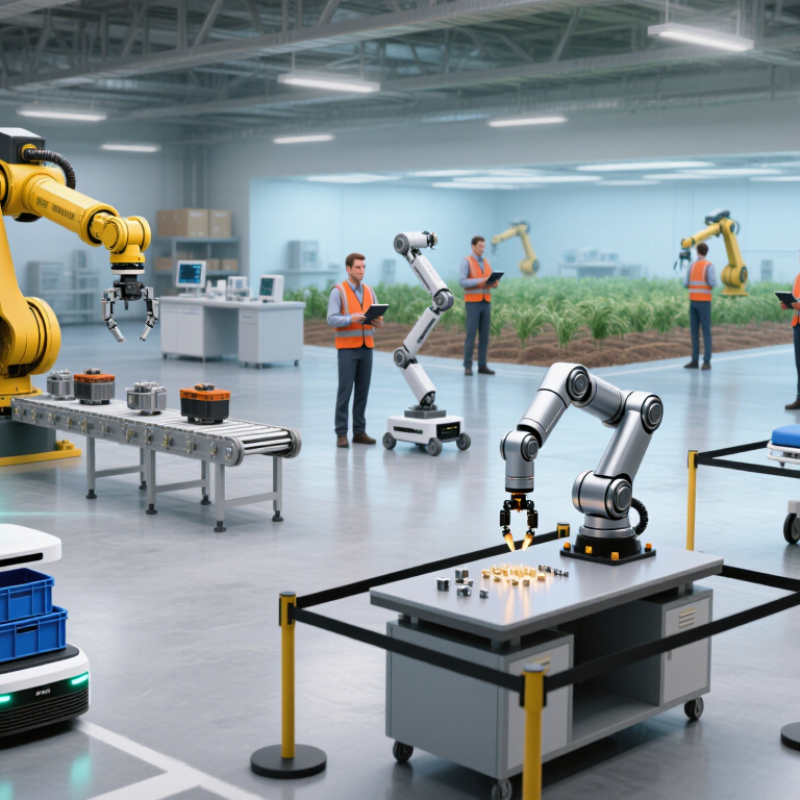
10 Best Robotic Systems for Global Buyers?

Robotic Systems: Definition, Types, and Global Applications

Robotic systems are machines that sense surroundings, process information, and perform physical tasks. They may work alone or support human operators. Common types include industrial arms, mobile robots, collaborative robots, inspection units, warehouse vehicles, and agricultural machines. Each type combines hardware, software, sensors, and safety controls. The right choice depends on workload, environment, accuracy, speed, and maintenance capacity.

Global applications are expanding across factories, hospitals, farms, ports, laboratories, and public infrastructure. A robotic arm can place small components with steady precision. A mobile unit can transport sealed containers through a warehouse. Inspection robots can examine pipelines, bridges, or solar panels where access is difficult. In hospitals, service robots may deliver supplies, but trained staff still control critical decisions. Local electrical requirements, worker protection rules, and data regulations must guide deployment.

From practical evaluations, reliable performance often matters more than impressive movement. Buyers should check payload, battery duration, navigation accuracy, software updates, spare parts, and operator training. No system is perfect. Sensors can lose accuracy in dust, rain, glare, or crowded spaces. A polished demonstration can mislead. Pilot testing under real conditions exposes weak points, including slow recovery after an unexpected obstacle. Buyers should also request maintenance records, risk assessments, and clear support terms. These details make global procurement safer and more predictable.

Key Criteria for Comparing Robotic Systems Worldwide

10 Best Robotic Systems for Global Buyers?

Comparing robotic systems worldwide requires more than checking payload and purchase price. Start with the task: payload, reach, cycle time, repeatability, and working temperature. A compact cell may outperform a larger system when floor space is expensive. Fit matters more.

The International Federation of Robotics reported 541,302 industrial robot installations in 2023. Its World Robotics 2024 report also recorded about 4.28 million robots operating globally. This scale makes service coverage and spare-part access serious buying criteria. Ask for regional response times, technician training, warranty limits, and documented uptime. A system without local support can become costly during one weekend failure.

Safety and integration deserve equal attention. Confirm conformity with ISO 10218 and relevant local machinery requirements. Review guarding, emergency stops, collaborative force limits, cybersecurity, and software update procedures. Compare total cost over five years, including energy, tooling, training, maintenance, and production downtime. The Global Robotics Survey 2024 from Deloitte highlights implementation capability as a major automation challenge. That finding deserves attention. A technically impressive system may still fail through poor operator training or weak data integration. Buyers should request a live trial using their own parts, because polished demonstrations can hide awkward handling, unstable lighting, or difficult changeovers.ಿಜೆ

Ten Leading Robotic Systems for Different Buyer Needs

10 Best Robotic Systems for Global Buyers?

Ten Leading Robotic Systems for Different Buyer Needs

Global buyers should match robotic systems to tasks, not marketing claims. The ten strongest categories include collaborative cells for flexible assembly, six-axis arms for complex handling, SCARA systems for fast electronics work, and delta robots for lightweight sorting. Mobile robots suit warehouse movement, while automated guided vehicles support fixed routes. Palletizing robots handle repetitive stacking. Vision-guided systems manage variable parts. Automated storage systems improve inventory access. Inspection robots support consistent quality checks.

IFR’s World Robotics 2024 report recorded 541,302 industrial robot installations worldwide in 2023, with more than 4.28 million units operating globally.

Buyer needs differ sharply. A small factory may value quick redeployment and simple programming. A distribution center may prioritize battery life, fleet coordination, and safe pedestrian interaction. A food processor needs washdown-friendly construction and precise product handling.

The World Economic Forum’s Future of Jobs Report 2025 found that 58% of employers expect robotics and autonomous systems to transform business by 2030.

That forecast is useful, but it does not replace site testing.

Real purchasing experience exposes uncomfortable gaps. A fast robot can still fail when lighting changes, cartons deform, or workers alter the workflow. Energy use, spare-part access, cybersecurity, training, and local safety validation deserve equal attention.

I would not rank one system as universally best. A pilot with real products, measured cycle times, and recorded downtime reveals more than a polished demonstration.

Some buyers also underestimate integration costs. That mistake remains common.

Regional Regulations, Integration, and Support Considerations

10 Best Robotic Systems for Global Buyers?

Regional Regulations, Integration, and Support Considerations

Choosing among the ten best robotic systems requires more than comparing payload, speed, and battery life. A system approved for one market may need new documentation elsewhere. Check machine-safety files, electrical ratings, wireless approvals, and local language requirements before signing a purchase order. Import records matter too. Small errors can delay installation for weeks.

Integration often decides the real cost. Confirm whether the robot communicates with your existing controllers, warehouse software, sensors, and safety equipment. Ask for interface specifications, sample code, and a test unit when possible. Measure aisle width, floor quality, lighting, and network coverage at the proposed site. These details look ordinary. They frequently expose major installation risks.

Support must extend beyond remote troubleshooting. A reliable supplier should offer regional technicians, spare-parts access, operator training, and clear response times. Check who handles firmware updates and whether updates affect compliance. In one evaluation, our checklist ignored local electrical inspection fees. That omission weakened the budget forecast. It also reminded us to request written responsibilities from every party. Support promises sound useful, but measurable service terms are safer. Ensure maintenance procedures match local workplace rules and your staff’s actual skills.

How Global Buyers Can Select the Right Robotic System

Global buyers should select a robotic system by workflow, not by an attractive specification sheet. A packaging cell may need speed, while a warehouse system may need navigation accuracy and safe human interaction. Define the task, product weight, operating temperature, floor condition, and expected daily cycles. Measure the real environment. Small details often decide performance.

Request practical evidence from each supplier. Ask for cycle-time tests using products similar to yours. Review maintenance records, training plans, spare-parts access, and remote support hours. A reliable system should connect with existing software and production equipment without excessive customization. Confirm safety functions, operator controls, and documentation for every destination market. Local technical support can matter more than a slightly lower purchase price.

Run a limited pilot before full deployment. Watch how the system handles dust, changing product sizes, interruptions, and operator mistakes. Perfect demonstrations are not enough. I have seen promising projects fail because cable routes, lighting, or floor space were ignored. Calculate total ownership costs, including installation, energy, repairs, software updates, and staff training. Leave room for uncertainty. No forecast is perfect, and early assumptions deserve another review.

10 Best Robotic Systems for Global Buyers? – How Global Buyers Can Select the Right Robotic System
Rank Robotic System Type Typical Payload Typical Reach or Coverage Typical Repeatability Typical Operating Speed Best-Fit Applications Global Selection Considerations
1 Six-Axis Industrial Robot 5–500 kg 0.7–4.0 m reach ±0.02–0.10 mm Approximately 1–2 m/s TCP speed Automotive Welding Palletizing Machine tending Choose based on wrist load, moment of inertia, environmental rating, controller compatibility, safety functions, local commissioning support, and availability of spare parts.
2 Collaborative Robot System 3–30 kg 0.5–1.8 m reach ±0.02–0.10 mm Usually limited by safety settings and task risk Assembly Inspection Packaging Small-batch production Verify the complete risk assessment rather than assuming operation without guarding. Check payload at full extension, tool weight, safety-rated stop functions, programming method, and applicable regional safety requirements.
3 SCARA Robot System 1–20 kg 0.3–1.0 m working area ±0.005–0.02 mm Up to approximately 60–120 cycles per minute, task dependent High-speed assembly Screwdriving Dispensing Electronics Best for fast planar movement. Compare cycle time using the same payload, stroke, acceleration profile, tooling, and approach distance; headline speed alone is not a reliable productivity measure.
4 Delta Parallel Robot System 0.5–15 kg 0.4–1.6 m working diameter ±0.1–0.5 mm Commonly 60–200 picks per minute, product dependent Food handling Sorting Packaging Small products Evaluate hygienic design, washdown rating, vision integration, conveyor synchronization, product orientation, and the effect of product spacing on actual pick rate.
5 Cartesian Gantry Robot 10–2,000+ kg Travel from 0.5 m to more than 20 m ±0.02–0.20 mm Approximately 0.1–2.0 m/s per axis Large-part handling CNC loading 3D printing Palletizing Often provides strong cost efficiency for rectangular workspaces. Assess floor loading, structural rigidity, cable management, travel length, installation tolerances, and maintenance access.
6 Automated Guided Vehicle (AGV) System 0.5–100+ tonnes Site-wide routes or fixed transport lanes Positioning commonly ±10–50 mm Approximately 0.5–2.0 m/s Line-side delivery Pallet transport Towing Warehouse logistics Review navigation infrastructure, route changes, floor condition, traffic control, battery charging, emergency stops, fire protection, and integration with warehouse or production software.
7 Autonomous Mobile Robot (AMR) System 50–1,500 kg Dynamic indoor coverage, commonly 5,000–100,000 m² per site Positioning commonly ±10–50 mm Approximately 0.8–2.5 m/s Goods-to-person Kitting Material movement Inventory transport Test performance under real traffic and wireless conditions. Confirm mapping, fleet-management interfaces, obstacle detection, elevator and door integration, battery strategy, and cybersecurity controls.
8 Machine Vision Robotic Inspection System Usually 1–50 kg tool or part load Camera-dependent; commonly 0.2–2.0 m inspection distance Robot repeatability commonly ±0.02–0.10 mm Inspection cycle commonly 1–30 seconds Dimensional inspection Defect detection Traceability Quality control Specify lighting, camera resolution, field of view, defect size, false-acceptance limits, data retention, calibration frequency, and how inspection results connect with quality systems.
9 Robotic Palletizing and Depalletizing Cell 10–300 kg per load, task dependent Typically 1.5–3.5 m vertical or horizontal working envelope ±0.03–0.10 mm Approximately 8–25 cycles per minute Cases Bags Bottles Mixed-SKU logistics Calculate throughput from product dimensions, layer pattern, pallet changeover, conveyor spacing, gripper change time, and stretch wrapping—not only from robot motion speed.
10 Robotic Welding and Cutting Cell 5–250 kg workpiece, fixture dependent Approximately 1–3 m reach ±0.02–0.10 mm Process dependent; robot TCP speed often up to approximately 2 m/s MIG/MAG welding TIG welding Laser cutting Fabrication Consider joint accessibility, fixture accuracy, fume extraction, shielding-gas management, heat distortion, consumable replacement, laser safety where applicable, and operator training requirements.
Typical ranges are indicative industry benchmarks for preliminary comparison. Actual performance depends on payload position, tooling, duty cycle, workspace, product geometry, safety settings, environmental conditions, software integration, and local regulations.