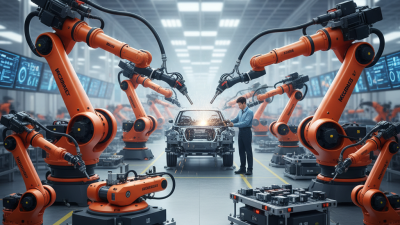
Explore the Future of Robotics and Automation in China?
In recent years, China's investment in robotics and automation has surged, signaling a pivotal shift in its industrial landscape. According to a report by the International Federation of Robotics, the country dominated global robotics installations in 2022, accounting for nearly 40% of the world's total. This trend reflects China's ambition to enhance productivity and reduce labor costs, facilitating its transition to a technology-driven economy.
Experts like Dr. Li Chen, a leading figure in the field, state, “China’s commitment to robotics and automation will reshape manufacturing.” This transformation is not without its challenges. While many industries benefit from automation, concerns about job displacement arise. The rapid pace of change demands careful reflection on balancing technological advancement and workforce implications.
Moreover, as robotic technology evolves, new ethical and operational dilemmas emerge. Questions about data privacy, safety standards, and reliability persist. The future of robotics and automation in China is promising yet complex, requiring stakeholders to navigate these uncertainties collectively. Understanding both the potential and the pitfalls will be crucial for effective implementation.

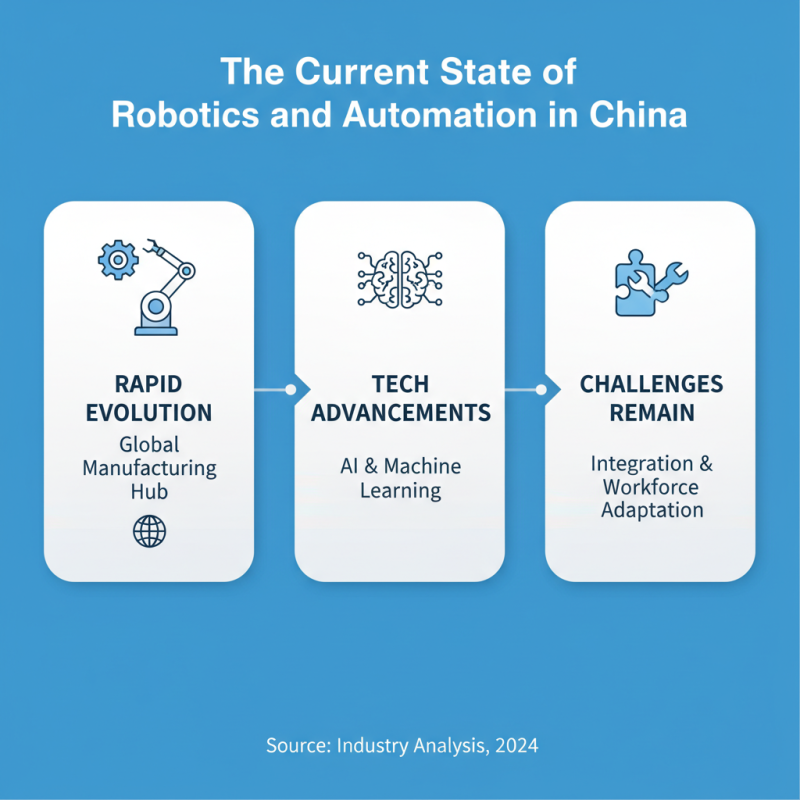
The Current State of Robotics and Automation in China
The robotics and automation sector in China is rapidly evolving. Currently, China holds a significant position in global manufacturing. This growth is supported by advancements in several technologies, such as AI and machine learning. However, challenges persist in integration and workforce adaptation.
Training and education in robotics are crucial. Many workers lack the necessary skills. The gap between technology and personnel needs careful attention. Employers must invest in training programs. Developing a skilled workforce involves collaboration between industries and educational institutions.
Tip: Consider local partnerships for training initiatives. Engage universities to create tailored programs. This will bridge the skills gap effectively.
Innovation is essential, yet China’s rapid development sometimes leads to oversight. The quality of robotics needs improvement. Not all robots meet international standards. Companies should prioritize quality control alongside innovation.
Tip: Implement regular assessments throughout development. This will ensure better compliance with global benchmarks. Addressing these challenges will help solidify China’s position in the global robotics landscape.
Key Industries Impacted by Robotics and Automation
Robotics and automation are transforming various industries in China, creating new opportunities and challenges. A report by the International Federation of Robotics indicates that the country is the world’s largest market for industrial robots. In 2021, China installed over 243,000 units, a 27% increase from the previous year. This rapid growth showcases the country’s commitment to integrating advanced technologies into manufacturing.
Key industries such as automotive, electronics, and logistics are significantly impacted. The automotive sector, for instance, sees robotics improving production efficiency. A study from Deloitte highlights that automakers using automation can reduce labor costs by up to 30%. However, concerns about job displacement persist. Workers may need retraining to adapt to automation technologies.
In logistics, automation enhances warehouse operations. A report from McKinsey notes that adopting these technologies can increase productivity by 25% to 40%.
While these advancements indicate a promising future, challenges remain. Companies must invest in skilled labor and infrastructure. There is also a need for clear regulations governing robotics and automation. Without these, growth might lead to ethical dilemmas and unintended consequences. The journey toward widespread robotics adoption in China is ongoing, and reflection on its impact is crucial.
Government Policies and Investment in Robotics Technologies
China is rapidly advancing in robotics and automation. Government policies play a crucial role in this transformation. The Chinese government has made significant investments in robotics technologies. These initiatives aim to boost technological innovation and economic development. Policies encourage research and development, focusing on integration in various sectors.
The emphasis on automation is notable in manufacturing. However, challenges persist. Companies often struggle with the high cost of technology. Moreover, there is a shortage of skilled workers. Training programs are essential to address this gap, yet they are not widely available. The government also seeks international collaboration, which can be beneficial. However, dealing with various regulations poses difficulties.
Investment in robotics can enhance productivity. Yet, it raises concerns about job displacement. Communities may resist automation due to fears of unemployment. Balancing these dynamics is crucial for sustainable development. The path forward requires careful consideration of both opportunities and potential pitfalls in this rapidly evolving landscape.
Future Trends in Chinese Robotics Innovation and Development
China's robotics industry is rapidly evolving. Experts predict that the market will reach $70 billion by 2025. This growth stems from the demand for automation across various sectors. Manufacturing and logistics lead the way, but healthcare is catching up fast.
A recent McKinsey report highlighted that 54% of jobs in China could be automated by 2030. This creates both opportunities and challenges. Companies must invest in reskilling their workforce to keep pace with technological advancements. However, many workers may struggle to transition into new roles. The speed of change raises concerns about job displacement and social inequality.
Moreover, China aims to develop its robotic capabilities through innovative research and development. Government support plays a crucial role. Funding has increased for startups and institutions focused on robotics. Yet, collaboration between academia and industry is often lacking. Strengthening these partnerships is essential for a sustainable future in robotics. Without that, innovation may falter.
Explore the Future of Robotics and Automation in China
| Category |
Current Trends |
Projected Growth (2025) |
Key Areas of Innovation |
| Industrial Robotics |
Increased automation in manufacturing |
8.5% CAGR |
AI integration, smart factories |
| Service Robotics |
Growth in hospitality and healthcare |
12% CAGR |
Healthcare robots, delivery robots |
| Agricultural Robotics |
Precision farming adoption |
10% CAGR |
Drones for crop monitoring |
| Logistics Automation |
Rise of automated warehouses |
15% CAGR |
Robotic sorters, autonomous vehicles |
| Human-Robot Interaction |
Focus on user experience |
9% CAGR |
Natural language processing |
Challenges Facing the Robotics Industry in China and Solutions
The robotics industry in China is facing several significant challenges.
Skilled labor shortages are a pressing issue. Many engineers lack the
hands-on experience needed for advanced robotics projects.
Training programs need to evolve. Universities must focus on practical skills, not just theory.
Additionally, there's a gap in collaboration between academia and industry. More partnerships could drive innovation.
Regulatory hurdles also present obstacles.
The fast-paced growth of robotics technology outstrips existing regulations. Companies often face uncertainties.
Clear guidelines are essential for safe and efficient operations. Moreover, companies must navigate
intellectual property concerns. Strengthening IP protection can boost innovation.
It encourages firms to invest in research and development.
Investment in research is crucial. While China excels in
manufacturing, more emphasis on innovation is necessary. Many projects lack funding, stifling potential breakthroughs.
The government can play a key role here. Supporting startups and fostering a culture of experimentation is vital.
A holistic approach will pave the way for a robust robotics landscape in China.