Defining a robot for your business begins with a practical question: what problem should it solve? A robot is not automatically useful because it moves, speaks, or uses artificial intelligence. Its value depends on a clear task, measurable results, and safe cooperation with people. To define robot requirements properly, examine your daily workflow, workplace conditions, and customer expectations.
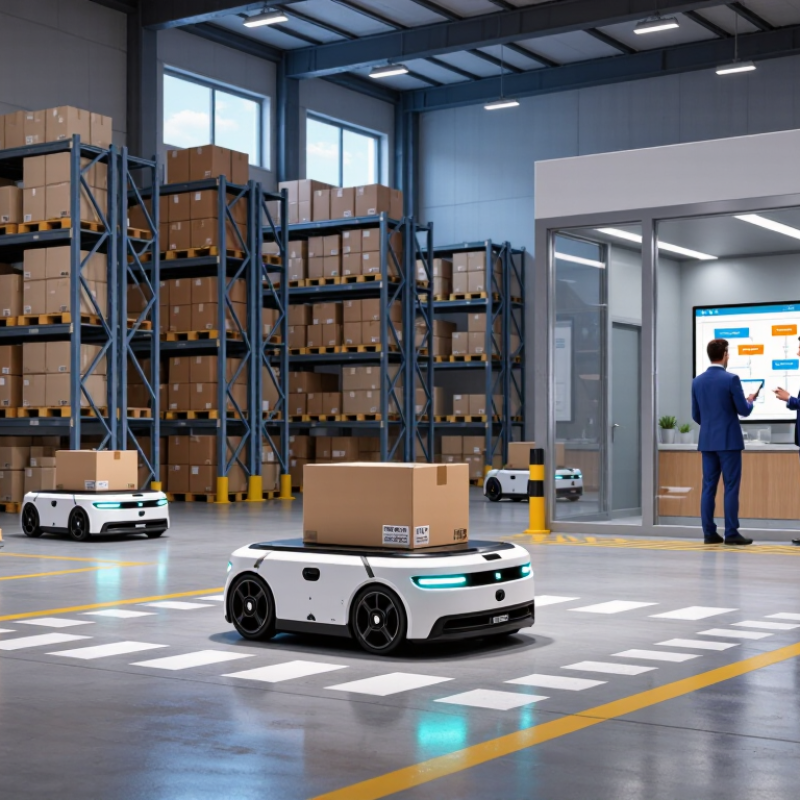
Picture a warehouse worker lifting the same box hundreds of times each day. A mobile robot could transport materials, reduce walking time, and support safer operations. In a restaurant, a robot might deliver meals across a crowded floor, but it still needs reliable navigation and simple human controls. These details matter more than impressive specifications. Check loading limits, battery life, cleaning needs, software compatibility, and maintenance support before choosing a system.
A strong definition also includes business evidence. Record current labor hours, delays, error rates, and operating costs. Then compare realistic improvements after deployment. Experienced teams test robots in a limited area before expanding them. The first plan may be wrong. That is useful.
Staff feedback can reveal obstacles that spreadsheets miss, such as narrow aisles or confusing alerts. Independent safety guidance and qualified suppliers should influence the final decision. The right robot fits your process, respects workplace safety, and remains reliable under ordinary pressure. This article explains how to define robot functions, evaluate vendors, and build a responsible plan that can grow with your business.
In a business context, a robot is more than a machine with arms and sensors. It is a system that senses conditions, makes limited decisions, and performs repeatable tasks with reduced human intervention. The task may involve moving materials, inspecting products, cleaning floors, or handling digital records. The physical form matters less than the work it completes.
The International Federation of Robotics reported 541,302 industrial robot installations worldwide in 2023. Its World Robotics 2024 report also recorded more than 4.28 million industrial robots operating globally. These figures show adoption, not automatic success. A robot should be defined by business purpose, measurable output, and operating boundaries.
For example, a mobile unit that moves boxes between storage zones is a logistics robot. Software that transfers invoice data between systems may be a robotic process automation tool. Both reduce repetitive effort, but they carry different risks and costs.
The practical definition should include the human role. Who approves exceptions? Who maintains the equipment? What happens when a sensor misreads a package? The World Economic Forum’s Future of Jobs Report 2023 found that 44% of workers’ skills may be disrupted within five years. That finding suggests redesigning work, not simply removing people. In real projects, teams sometimes call any automated device a robot. That is convenient, but inaccurate. A better definition connects autonomy, task performance, safety controls, and business value. It also admits uncertainty. Not every automated process deserves a robotic label.
A robot is not the problem statement. The real question is which costly, repetitive, or risky task needs improvement.
A useful assessment begins with direct observation, not equipment specifications. Watch the workflow during a normal shift. Record walking distance, waiting time, error rates, and physical strain. Speak with the employees doing the work. Their practical knowledge often reveals problems hidden in management reports.
Suppose staff carry small containers between storage shelves and inspection tables. The visible issue may seem like slow transport. The deeper issue could be interrupted attention, crowded aisles, or inconsistent delivery timing.
Define the problem in measurable terms: reduce unnecessary walking by 30 percent, maintain accurate delivery records, or free two hours per shift for quality checks.
That gap matters. A robot should support a clear business outcome, not simply appear innovative.
Test the idea with a limited pilot. Select one route, one shift, and a small group of trained users. Compare results against the existing process, including maintenance time, training effort, safety controls, and employee acceptance. Do not measure speed alone. A faster system may create new delays if workers must constantly correct it.
Our first assumption may be wrong. The pilot should make that visible before a larger investment.
Keep human oversight where judgment, unexpected obstacles, or changing priorities remain important. The best definition may be narrower than expected, and that is often a sign of careful planning.
Choosing a robot starts with the task, not the machine. Define the load, cycle time, accuracy, reach, and human contact level. A fixed industrial arm suits repetitive welding, palletizing, or machine tending. It needs guarding, stable floors, and predictable layouts. The International Federation of Robotics reported 541,302 industrial robots installed worldwide in 2023. That scale reflects proven value, but not universal fit.
Collaborative robots can support workers beside assembly benches. They fit lighter handling, inspection, and frequent product changes. However, “collaborative” does not mean risk-free. A safety assessment must examine speed, tools, payload, pinch points, and unexpected motion. Autonomous mobile robots suit warehouses with changing routes and repeated transport. They need clear traffic rules, reliable maps, and charging plans. The 2024 World Robotics report recorded professional service robot sales of nearly 205,000 units in 2023.
Work conditions often decide the answer. Dust, moisture, heat, narrow aisles, and uneven floors can defeat an otherwise capable system. Measure the real workspace. Walk the route during busy shifts. A robot that works perfectly during testing may struggle when pallets move or people stop nearby. This is where many plans remain too optimistic. Start with one measurable task, such as moving 200 bins daily. Track downtime, operator acceptance, maintenance effort, and actual payback. The best choice may be less advanced, but easier to control and improve.
Which robot type fits your tasks and work environment?
Typical payload ranges help narrow the choice: delta robots suit lightweight, high-speed picking; SCARA robots fit fast assembly and handling; collaborative robots support flexible workstations; articulated robots handle complex movements and heavier loads; and AMRs transport materials across changing indoor routes. Actual capacity, reach, speed, safety requirements, and floor conditions should be verified for each application.
Defining a business robot starts with the task, not the machine. Measure payload, reach, cycle time, repeatability, sensing, and environmental limits. A robot lifting 12 kilograms may fail when the gripper, cable, and product together exceed that figure. Small details matter.
Industry data shows why evaluation needs discipline. The International Federation of Robotics reported 541,302 industrial robot installations worldwide in 2023, with more than 4.28 million robots operating globally (World Robotics 2024). Adoption is growing, but capability is not universal. Test the robot with real lighting, product variation, floor conditions, and operator movement. A clean demonstration can mislead.
Costs extend beyond purchase price. Include integration, tooling, guarding, software, training, maintenance, energy, and production downtime. The National Institute of Standards and Technology highlights measurement, interoperability, and safe human-robot interaction as practical automation concerns. Risk reviews should examine pinch points, unexpected restarts, data failures, and manual recovery. A spreadsheet can still lie. My own early estimates would have ignored changeover time, which often determines payback. Ask suppliers for measured cycle times, failure rates, service response times, and documented safety evidence. Then repeat the test during the least predictable shift.
How to Evaluate Robot Capabilities, Costs, and Risks
| Robot Category | Typical Business Tasks | Typical Payload | Operating Speed / Throughput | Indicative Purchase Cost* | Integration Cost* | Deployment Time | Best-Fit Environment | Main Capability | Primary Risks | Business Readiness |
|---|---|---|---|---|---|---|---|---|---|---|
| Autonomous Mobile Robot | Material transport, warehouse replenishment, line-side delivery, order movement | 300–1,500 kg | Typically 1–2 m/s; commonly supports continuous multi-shift operation with charging management | US$30,000–150,000 per unit | US$10,000–75,000 per site | 2–6 months | Warehouses, factories, hospitals, distribution centers | Flexible navigation using maps, sensors, and fleet software | Congestion, blocked routes, battery downtime, weak interfaces with warehouse or production systems | High for repeatable transport routes |
| Collaborative Robot Arm | Machine tending, assembly, inspection, screwdriving, dispensing, packaging | 3–20 kg | Usually 10–30 picks per minute, depending on reach, payload, tooling, and safety limits | US$25,000–80,000 per arm | US$15,000–100,000 per application | 1–4 months | Small and medium production lines with frequent changeovers | Simpler programming and operation near trained workers when validated for the application | Poor cycle-time assumptions, gripper limitations, safety-zone changes, inconsistent workpieces | High for stable tasks with defined workpieces |
| Industrial Articulated Robot | High-speed welding, palletizing, painting, press tending, heavy assembly | 10–500+ kg | High repeatability and fast cycle times; actual throughput depends on tooling and process design | US$40,000–150,000 per robot | US$50,000–250,000 per cell | 3–12 months | High-volume manufacturing with controlled layouts and repeatable processes | High speed, reach, payload, and repeatability | Higher guarding requirements, specialized maintenance, costly downtime, limited flexibility after installation | High for high-volume, low-variation production |
| Automated Guided Vehicle | Fixed-route pallet movement, tugger operations, repetitive internal logistics | 500–2,000+ kg | Typically 0.5–1.5 m/s on predefined routes | US$20,000–100,000 per vehicle | US$20,000–150,000 per site | 3–9 months | Facilities with stable layouts and predictable traffic patterns | Reliable point-to-point movement with controlled traffic rules | Route changes, floor or marker damage, traffic bottlenecks, limited adaptability | High when routes remain stable |
| Machine Vision Inspection System | Presence checks, dimensional inspection, defect detection, barcode and label verification | Not applicable; product handling is usually separate | From several parts to hundreds of parts per minute, depending on image complexity | US$15,000–100,000 per station | US$20,000–150,000 per application | 1–6 months | Production lines with consistent lighting, orientation, and quality criteria | Fast, repeatable visual decisions when defect examples are well defined | False rejects, missed defects, changing lighting, insufficient training images | Medium to High, depending on product variation |
| Mobile Manipulator | Picking from variable locations, replenishment, machine interaction, semi-structured service tasks | 3–15 kg at the arm, depending on configuration | Lower throughput than dedicated automation; performance is highly task-dependent | US$80,000–250,000 per system | US$50,000–300,000 per deployment | 6–18 months | Facilities requiring both navigation and robotic handling | Combines mobility, perception, and manipulation in one workflow | Complex integration, variable grasping results, safety validation, limited edge-case performance | Medium; pilot before large-scale deployment |
| Service or Hospitality Robot | Room delivery, indoor transport, customer guidance, basic cleaning or support tasks | 10–50 kg | Designed for low-to-moderate throughput in public or semi-public areas | US$20,000–100,000 per unit | US$10,000–75,000 per site | 1–4 months | Hotels, healthcare facilities, offices, campuses, retail environments | Autonomous indoor navigation and customer-facing interaction | Public acceptance, elevators and doors, privacy concerns, interaction failures, cleaning and uptime requirements | Medium; validate customer experience and operating procedures |
Include hardware, tooling, safety equipment, software licenses, site preparation, integration, training, maintenance, spare parts, energy, cybersecurity, and downtime.
Measure payload, reach, speed, repeatability, uptime, cycle time, navigation accuracy, changeover time, system interfaces, and performance under real operating conditions.
Review worker safety, regulatory compliance, cybersecurity, data privacy, supplier support, spare-parts availability, failure recovery, operator training, and business continuity.
*Cost ranges are indicative planning estimates in US dollars for common business deployments. Actual costs vary by payload, tooling, sensors, software, safety design, facility conditions, labor rates, integration complexity, service contracts, and local regulations. Validate all figures through a site-specific quotation and pilot test.
How to Define a Robot for Your Business?
Robot deployment should begin with a clear business problem, not an impressive machine. Map one complete workflow, from material arrival to final inspection. Record walking distance, waiting time, errors, and safety concerns. These details reveal where automation can create measurable value.
Choose a robot according to its task, load, reach, speed, and working environment. A simple pilot is often safer than a large rollout. The first plan may be wrong. That is normal.
Tips:
Set one measurable target. For example, reduce packing delays by 20 percent within eight weeks. Assign a trained operator to monitor the pilot each day. Keep a written log of stoppages, unusual movements, and maintenance needs. Ask employees for feedback, because they notice practical problems early. Do not hide failures.
Management requires clear ownership. Define who approves changes, checks safety controls, and responds to faults. Provide hands-on training before regular operation begins. Keep operating instructions near the work cell, using short steps and clear warnings.
Review performance weekly, but avoid changing several variables at once. Otherwise, you may not know what improved the result. Improvement should follow evidence, not enthusiasm. Compare current results with the original baseline, then adjust speed, layout, scheduling, or training. Some tasks may remain better suited to people. A thoughtful deployment accepts that limitation.