Why Are Manufacturing Robots Essential for Global Buyers?

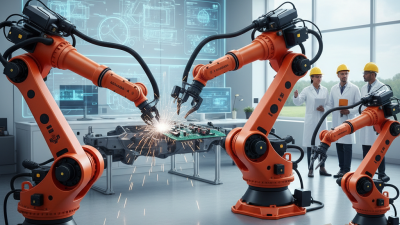
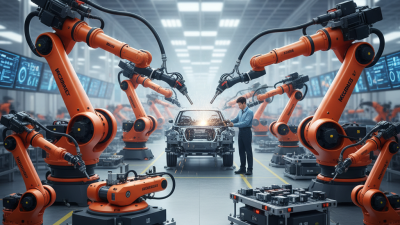
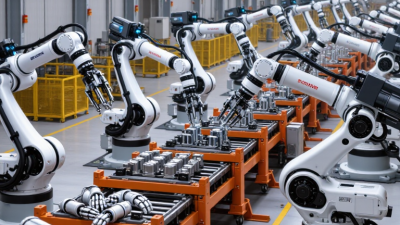
Manufacturing robots are becoming essential for global buyers who need stable output, consistent quality, and measurable production gains. In automotive, electronics, packaging, and metalworking plants, robots repeat precise movements for thousands of cycles. They can weld a clean seam, lift heavy components, or place fragile parts without fatigue. This consistency helps buyers reduce defects and protect delivery schedules.

Global procurement decisions require more than impressive demonstrations. Buyers must examine cycle time, payload, reach, energy use, maintenance access, and software compatibility. A robotic arm may look productive on a showroom floor. Its real value appears beside conveyors, sensors, operators, and quality systems. Experienced manufacturers also assess training, spare parts, remote support, and integration risks before signing a contract. These details often determine whether an investment succeeds.

Safety remains central. Reliable suppliers provide clear documentation, risk assessments, guarding options, and operator training aligned with applicable requirements. Still, automation is not a magic solution. A robot cannot repair weak production planning. It may even expose poor processes more quickly. That uncomfortable lesson matters. Buyers should compare verified performance data, pilot results, warranty terms, and the supplier’s service record. They should question optimistic claims.

The strongest business case combines productivity with resilience. Manufacturing robots can help factories manage labor shortages, demanding quality targets, and changing product designs. However, responsible adoption requires realistic budgets and continuous improvement. A successful buyer does not simply purchase a machine. They build a dependable production capability. That difference is easy to miss.
Why Are Manufacturing Robots Essential for Global Buyers?

What Are Manufacturing Robots and How Do They Work?

Why Are Manufacturing Robots Essential for Global Buyers?

What Are Manufacturing Robots and How Do They Work?

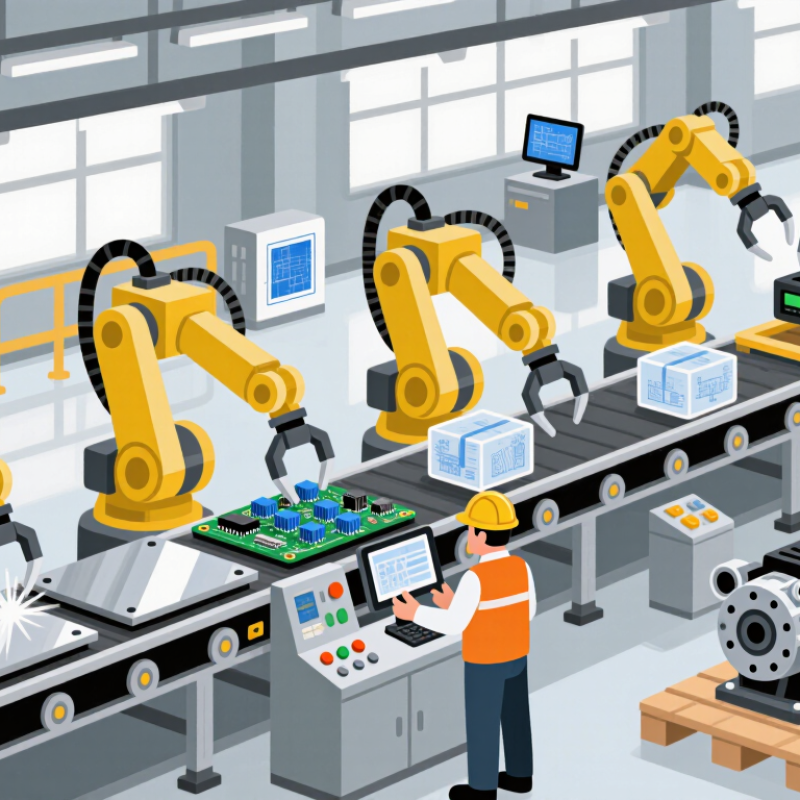
Manufacturing robots are programmable machines that move materials, tools, or components with repeatable precision. They usually include a mechanical arm, controller, end effector, sensors, and safety systems. The arm follows digital instructions created from coordinates, motion paths, and process limits. A gripper may lift a metal part, while a welding tool joins two prepared surfaces. The task looks simple. The control logic is not.

According to the International Federation of Robotics’ World Robotics 2024 report, factories installed 541,302 industrial robots in 2023. The global operational stock reached approximately 4.28 million units. These figures show expanding adoption, but they do not guarantee successful deployment. Each robot needs suitable reach, payload, cycle time, tooling, and workplace integration. A buyer should test the complete application, not only the machine’s headline specifications.

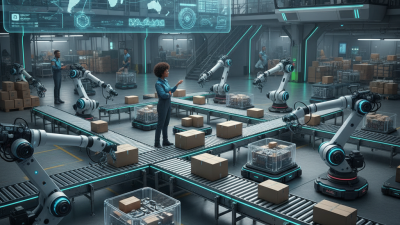
During operation, sensors detect position, force, distance, or unexpected changes. The controller compares this feedback with the programmed motion, then adjusts speed or direction. Communication with production equipment can coordinate conveyors, inspection stations, and safety interlocks. The loop repeats. However, sensors can misread reflective surfaces, and poorly designed fixtures can reduce accuracy. No robot is magically autonomous. Skilled technicians still program, maintain, and validate the cell under applicable safety requirements, including ISO 10218 principles. That human involvement remains easy to underestimate.

Why Do Global Buyers Depend on Robotic Manufacturing?

Global buyers depend on robotic manufacturing because consistency matters across borders. A robotic arm can place components within millimeter-level tolerances, shift after shift. This stability helps buyers receive similar products from different production cycles. It also supports clearer quality records, which purchasing teams need during audits.

In factory assessments, buyers often examine cycle times, defect rates, maintenance logs, and traceability systems. Robots collect useful production data while repeating precise tasks with fewer variations. They can also work in controlled environments where temperature, dust, or repetitive motion creates challenges for people. Reliable output matters.

But automation is not a perfect answer. Machines still need skilled technicians, scheduled servicing, and careful programming. A sensor may fail. A changeover may take longer than expected. Buyers should examine the whole production system, not only the robot count. Energy use, spare-part access, operator training, and software compatibility can affect the real cost. Human judgment remains essential for unusual defects and urgent adjustments. Over-automation can create rigidity when product designs change quickly. Smart buyers therefore depend on robotics for measurable precision, while checking whether the factory can respond when reality becomes less predictable.

Which Benefits Make Robots Valuable Across Industries?

Why Are Manufacturing Robots Essential for Global Buyers?

Which Benefits Make Robots Valuable Across Industries?

Manufacturing robots create value through repeatable movement, stable output, and measurable production data. They can weld, assemble, inspect, package, or move materials with consistent timing. Consistency matters. A robot does not tire during a long shift, although its performance still depends on maintenance and programming quality.

Across automotive, electronics, food processing, and medical equipment production, robots can reduce handling errors and improve workplace safety. They can work near heat, fumes, sharp edges, or repetitive motions that may strain employees. In a factory evaluation, a robotic arm may complete the same pick-and-place cycle every few seconds, while sensors record stoppages and cycle variations. This information helps managers identify delays before they become expensive problems.

Flexibility also matters to global buyers. Modern systems can often change tools, programs, or production settings for different products. That supports shorter production runs and regional customization. However, automation is not automatically efficient. Poor layout planning can create bottlenecks, and untrained staff may struggle when equipment stops. Not always. A lower purchase price can hide costs for integration, spare parts, training, and software updates. Buyers should examine total operating costs, safety compliance, supplier support, and expected service life. They should also test the robot with real materials, real cycle times, and realistic quality standards before making a large investment.

What Should Buyers Evaluate Before Choosing a Manufacturing Robot?

Manufacturing robots help global buyers maintain consistent output, even when labor availability changes. Yet choosing one requires more than checking its advertised speed. Buyers should measure payload, reach, repeatability, and cycle time against real production tasks. A robot lifting heavy castings may need slower movements than a brochure suggests. Ask for performance data under comparable loads.

Integration deserves equal attention. Check communication protocols, vision compatibility, fixture requirements, and programming access. The end effector must grip the product without damaging edges or surfaces. Safety systems should match the workplace layout and applicable local requirements. Include guarding, emergency stops, risk assessment, and operator training in the evaluation. These details affect installation time and daily reliability.

Operating cost is often underestimated. Review energy use, spare-part availability, maintenance intervals, software support, and technician training. Request a factory acceptance test using representative materials and a complete production sequence. Short tests can hide heat buildup, cable wear, or difficult recovery procedures. A pilot cell gives better evidence. It may also expose weaknesses in the buyer’s own process. That is useful, though uncomfortable. A cheaper robot can become expensive when fixtures, integration, and downtime are added later. Buyers should compare total ownership cost over several years, not only the purchase price. Capture actual cycle data, failure records, and operator feedback before approving a full deployment.

Why Are Manufacturing Robots Essential for Global Buyers? - What Should Buyers Evaluate Before Choosing a Manufacturing Robot?

Evaluation Dimension Typical Industrial Reference Data Why It Matters to Global Buyers What Buyers Should Verify Recommended Decision Check
Robot Type and Application Fit Articulated robots are widely used for welding, assembly, machine tending, painting, and palletizing. SCARA robots are commonly selected for high-speed planar assembly, while delta robots are used for lightweight picking and packaging. The robot’s kinematic structure determines its motion range, speed, payload capability, installation footprint, and suitability for the production task. Application cycle, part geometry, required axes, work envelope, process forces, tooling, and access direction. Choose the simplest robot architecture that meets the required motion and process performance.
Payload Capacity Industrial robots commonly cover payload classes from below 5 kg to more than 500 kg. The effective payload must include the workpiece, gripper, cables, adapters, and process equipment. Insufficient payload capacity can reduce accuracy, increase mechanical wear, and create safety risks. Oversizing can increase purchase and operating costs. Rated payload at the required wrist orientation, center-of-gravity limits, inertia limits, tooling mass, and cable-pack requirements. Select a model with a documented safety margin rather than matching only the nominal part weight.
Reach and Work Envelope Many general-purpose industrial robots provide approximately 0.5–3.0 m of reach; larger handling and palletizing systems can exceed this range. Adequate reach helps one robot serve multiple fixtures or machines and can reduce the number of robots required in a cell. Full 3D reach envelope, singularity zones, floor or ceiling mounting, interference with guarding, and access to maintenance areas. Validate the complete layout with CAD or a reach simulation before ordering.
Repeatability and Accuracy Many industrial robot specifications state pose repeatability in the range of approximately ±0.02–0.10 mm, depending on robot size, configuration, and measurement conditions. Repeatability affects assembly fit, dispensing consistency, welding quality, and the need for vision or external positioning systems. Test method, payload condition, temperature, robot speed, calibration procedure, absolute accuracy, and process tolerance. Compare measured application results, not only the headline repeatability value.
Cycle Time and Throughput Robot motion cycle times vary from less than 1 second for simple pick-and-place operations to several minutes for complex welding, painting, or assembly processes. A high-speed robot does not automatically produce higher output if loading, inspection, tooling changes, or material flow becomes the bottleneck. Complete takt time, dwell time, gripper response, fixture loading, changeover time, and downstream process capacity. Request a cycle-time study using the buyer’s actual part, tooling, and production sequence.
Operating Environment Standard robot installations are often designed for controlled factory environments. Food, pharmaceutical, cleanroom, outdoor, foundry, and paint applications require specialized protection and materials. Dust, moisture, chemicals, heat, washdown, and explosive atmospheres can significantly affect robot life, maintenance, and compliance. Ingress protection rating, operating temperature, humidity, corrosion resistance, cleanroom classification, and hazardous-area requirements. Match the robot and peripheral equipment to the documented environmental conditions of the target plant.
Safety and Compliance Industrial robot systems are commonly assessed against ISO 10218. Risk assessment, safeguarding, emergency stops, safety-rated monitoring, and protective devices are required according to the application and local regulations. Safety compliance affects legal approval, worker protection, installation time, insurance, and the ability to operate across different countries. Applicable national standards, risk assessment responsibility, safety functions, guarding, collaborative operation limits, and certification documentation. Confirm compliance requirements with a qualified machine-safety professional before final design approval.
Integration and Communication Modern robot cells may integrate with PLCs, vision systems, conveyors, sensors, manufacturing execution systems, and industrial networks such as Ethernet-based protocols. Good integration improves traceability, fault diagnosis, production flexibility, and coordination with existing equipment. Supported communication protocols, I/O capacity, software interfaces, cybersecurity controls, data formats, and remote-service policies. Require an interface list and integration responsibility matrix in the technical proposal.
Energy Consumption Robot energy demand depends on payload, motion profile, duty cycle, controller, tooling, compressed air, welding equipment, and peripheral systems. The robot arm is only one part of total cell consumption. Energy efficiency influences operating cost, carbon reporting, factory utility sizing, and sustainability targets. Electrical rating, average operating power, standby power, compressed-air consumption, regenerative functions, and utility requirements. Compare total cell energy use under the actual production duty cycle.
Reliability and Maintenance Reliability depends on duty cycle, load, environmental exposure, lubrication, cable routing, preventive maintenance, and the quality of the complete robotic cell. Planned maintenance and fast troubleshooting reduce unplanned downtime and protect production commitments. Maintenance intervals, spare-parts availability, diagnostic tools, mean repair expectations, service response, and technician training. Evaluate lifecycle support in the buyer’s operating region, not only the initial purchase price.
Flexibility and Changeover Programmable robots can support multiple products, tooling configurations, and process recipes when the cell includes suitable fixtures, sensors, and software. Flexibility is especially valuable for short product lifecycles, mixed-model production, and regional demand changes. Recipe management, automatic tool change, vision guidance, fixture adjustment, programming method, and changeover time. Measure flexibility by verified changeover time and supported product variations.
Total Cost of Ownership Total cost includes the robot, controller, tooling, fixtures, safety systems, vision, integration, installation, training, energy, maintenance, software, spare parts, and eventual replacement. A lower purchase price may produce a higher long-term cost if integration, downtime, training, or spare parts are underestimated. Five- to ten-year operating assumptions, labor savings, productivity gains, maintenance cost, downtime cost, and payback period. Compare projects using lifecycle cost and expected return on investment rather than equipment price alone.
Global Support and Documentation International projects commonly require multilingual manuals, electrical documentation, training materials, remote support, standardized spare parts, and region-specific compliance documents. Strong local support reduces commissioning delays and improves service continuity across multiple factories or countries. Local service coverage, response time, documentation language, training availability, software licensing, spare-parts logistics, and warranty terms. Score technical support and documentation as formal selection criteria in the purchasing process.

Reference framework: The evaluation categories reflect commonly used industrial automation practices and international robot-safety principles, including ISO 10218 and ISO 9283. Actual performance depends on the complete robot cell, application conditions, tooling, programming, and local regulations.

How Are Manufacturing Robots Shaping Global Production?

Manufacturing robots are reshaping global production by making repeatable work more stable across factories. A robotic arm can weld frames, place components, or inspect surfaces for hours. It does not remove every production challenge. It changes where human judgment matters.

In a high-volume plant, sensors track torque, temperature, and cycle time. Engineers use these readings to detect drift before defects spread through hundreds of units. This supports consistent output for buyers managing distant supply chains. Small errors matter. Robots also make production more flexible. With modular grippers and updated software, one cell can handle several product sizes.

Workers can move away from hot, heavy, or repetitive tasks. They can focus on setup, quality checks, maintenance, and process improvement. That shift requires training, not optimistic promises. Reliable deployment depends on risk assessments, guarding, emergency stops, and documented maintenance. International buyers should examine uptime records, spare-part access, operator training, and data security. A fast machine is not automatically a dependable supplier.

Automation remains imperfect. A poorly calibrated camera may miss a surface flaw. A worn gripper can damage parts quietly. Human audits still catch problems that algorithms overlook. The strongest factories combine machine consistency with experienced workers who question unusual results. This balance can shorten lead times and reduce waste, although every facility needs regular review as products and markets change.